

Background
For the first time, a method based on machine learning enables a standardised and regularly updated presentation of past, current and future groundwater levels throughout Germany. Forecast periods range from short-term (up to 3 months) to medium-term (10 years) and long-term (up to 2100) in order to objectively assess the development of groundwater levels against the background of climate change, taking into account the scenarios of the Intergovernmental Panel on Climate Change (IPCC). In addition to groundwater data from the monitoring networks of the relevant state authorities, the information base also includes weather and climate forecasts and climate projections from the German Weather Service (DWD).The MENTOR project developed and applied algorithms based on Artificial Neural Networks (ANNs) to calculate groundwater levels at around 120 reference monitoring wells. The main objective was to replace traditional physical-numerical models with machine learning to predict groundwater levels nationwide using available data. This can compensate for missing or incomplete field data, such as geometries and physical properties of the subsurface. This was possible by reducing the problem to a simple input-output relationship. The previously complex and expensive data collection to characterise the subsurface is no longer necessary.
Knowledge of past, present and future groundwater levels provides decision-makers and practitioners in the water sector with important information on long-term trends and changes in groundwater availability. This can help to anticipate potential problems such as droughts and develop appropriate strategies for managing groundwater resources for drinking water supply and agricultural irrigation. Groundwater level forecasts can also raise public awareness of potential water shortage situations due to low groundwater levels and overflow situations due to high groundwater levels.
Groundwater is a vital and indispensable resource worldwide. In Germany, according to the Federal Statistical Office, groundwater and spring water will account for 70.6 % of the public water supply in 2022, with 3.76 billion cubic metres (bcm) of water beeing extracted to meet a large part of the population's daily water needs. In Bremen, Hamburg and Schleswig-Holstein, 100 % of the public water supply is based on groundwater. In contrast, groundwater and spring water play only a minor role (17.4 %) in the non-public water supply, where industry is the main user, with 2.23 bcm beeing pumped in 2022.
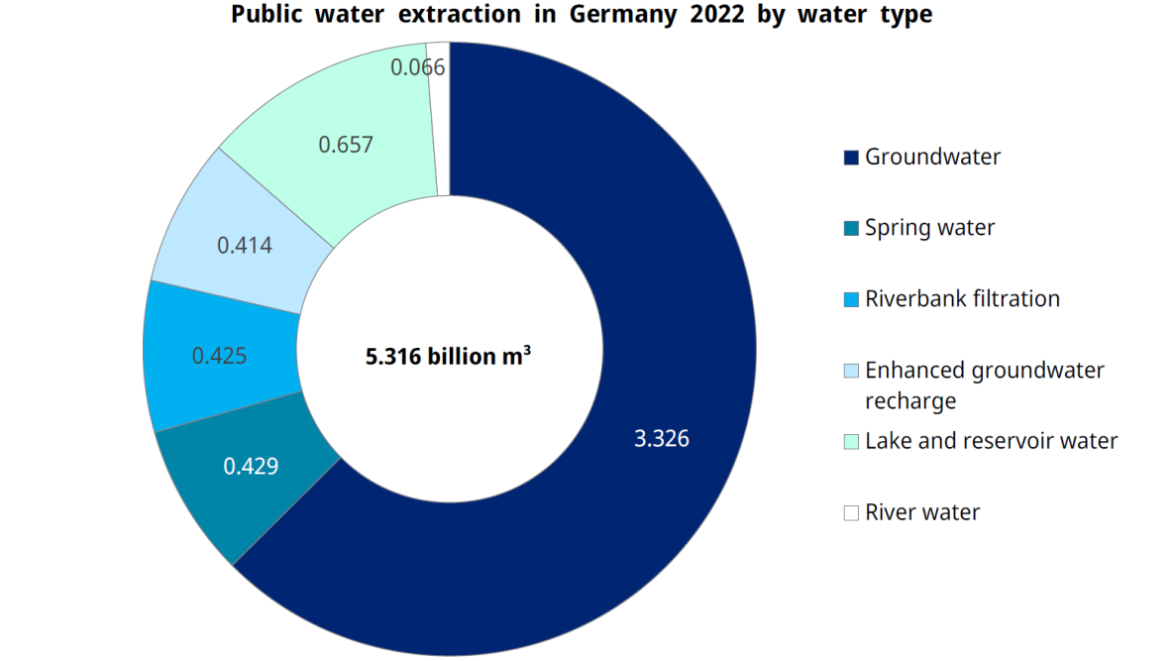
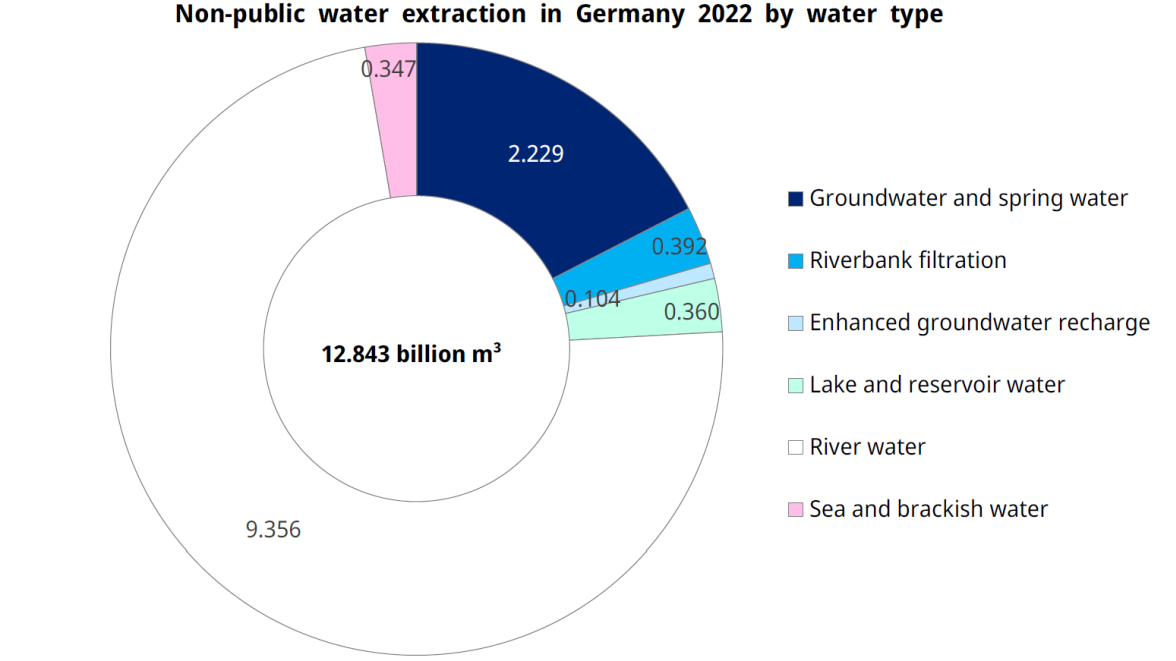
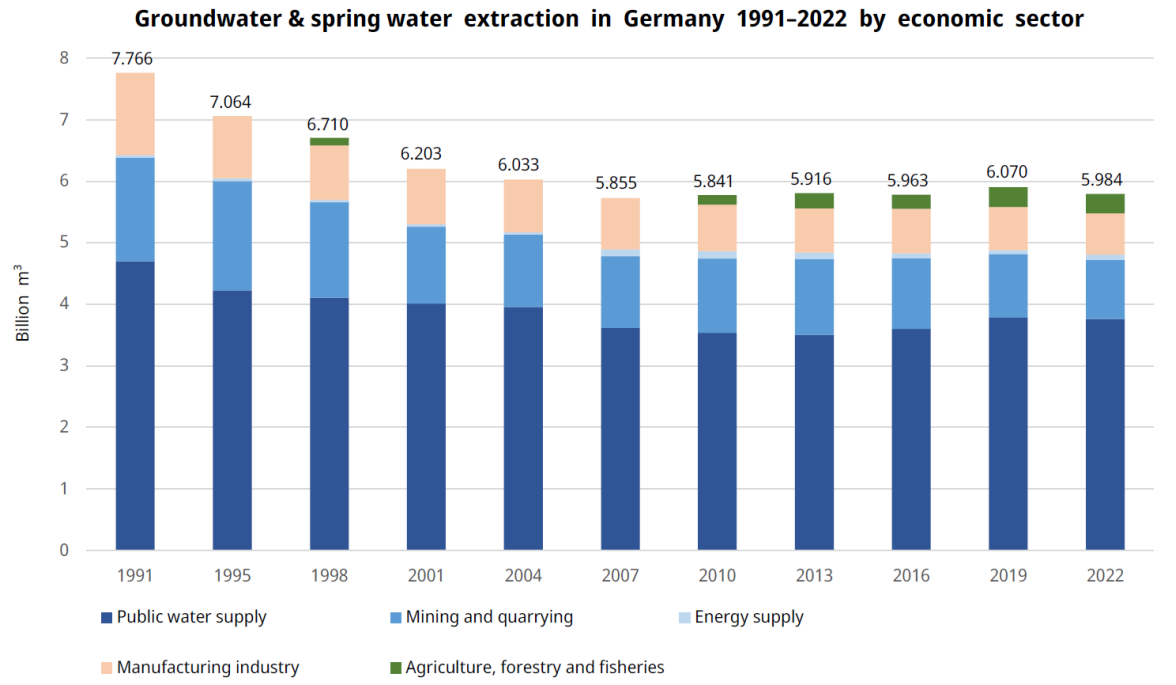
The use of groundwater and spring water in Germany has been in decline for over 30 years. Between 1991 and 2022, usage fell from 7.8 billion to 6.0 billion cubic metres, a reduction of 22.9 per cent. Since the 2010s, usage has stabilised at around 6 billion m³ per year. Over the coming decades, the extraction of groundwater and spring water is expected to decline further as dewatering measures will cease when lignite mining ends by 2038 at the latest.
Further information on the water supply and a brief overview of Germany’s hydrogeological conditions can be found on the page Groundwater resources in Germany.